The Fall of Singapore: A Chronology of 15 February 1942
The final days of the campaign and the surrender at the Ford Motor Factory.
The Fall of Singapore: A Chronology of 15 February 1942
By 1942MALAYA
The morning of 15 February 1942 dawned on a city that was dying. The oil fires from the naval base still burned, sending a black pall over the island. The water supply was failing. The Japanese were within artillery range of the city centre. And the British commander, Lieutenant-General Arthur Percival, had run out of options.
This is the chronology of that final day—the day an empire surrendered.
9:30 AM — The Staff Meeting
Percival gathered his principal staff officers at his headquarters at Fort Canning for a critical meeting . The situation was laid bare.
The water supply was reported to be dire, with total failure expected within 24 hours . Food was adequate. Small-arms ammunition was sufficient. But fuel and heavier ammunition were already running low .
Percival framed the choice starkly: a counter-attack to regain control of the water reservoirs, or an immediate surrender . With the troops exhausted and the Japanese pressing hard, a counter-attack was clearly impossible.
That morning, a telegram arrived from General Archibald Wavell, the Commander-in-Chief in India. Wavell gave Percival discretion to surrender if he felt it was no longer possible to continue fighting .
The decision was made.
Late Morning — The White Flag
Percival sent a delegation to the Japanese lines under a flag of truce. The party included Brigadier Newbigging, Brigadier Torrance, and Major Wild . Their destination was the Ford Motor Factory at Bukit Timah, which General Yamashita had made his headquarters .
The choice of the Ford Factory was not accidental. It was a symbol of Western industry and colonial power—now occupied by the Japanese conqueror .
5:15 PM — Percival Arrives
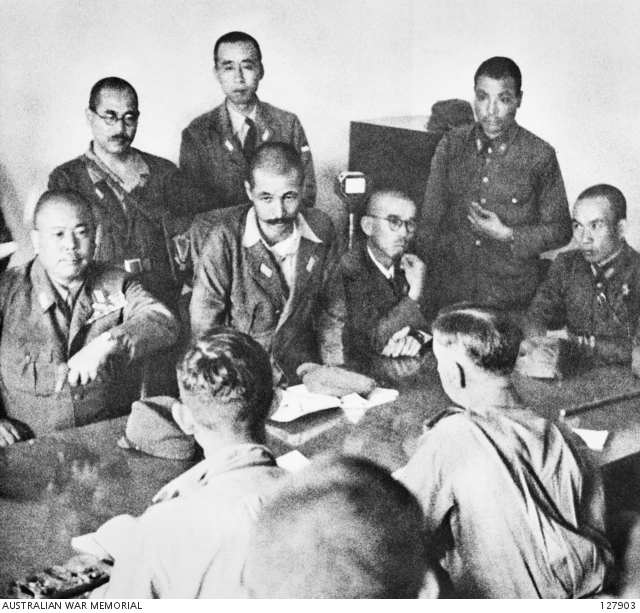
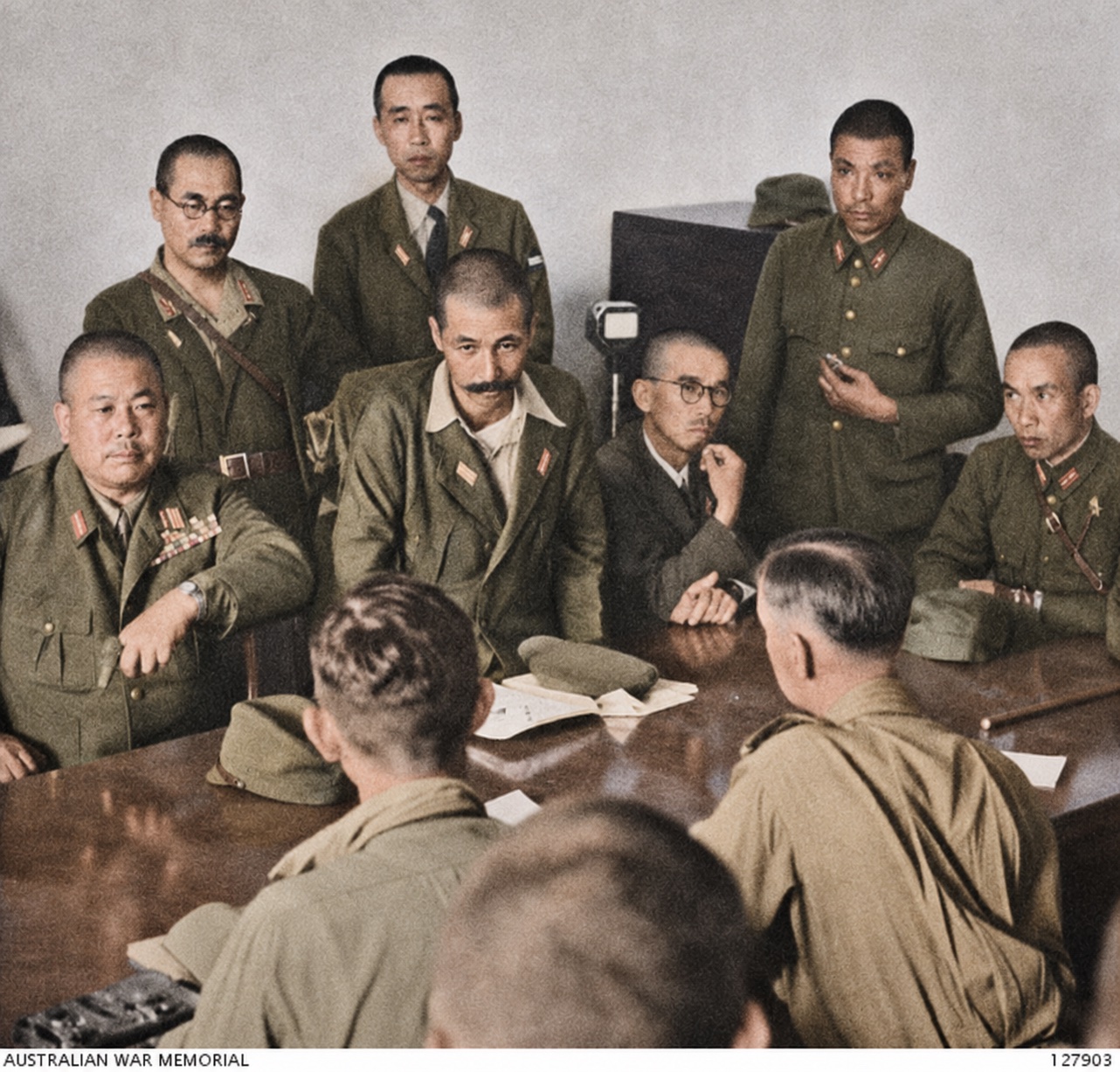
At 1715 hours, Percival and his chief of staff arrived at the Ford Factory . The British delegation was led into the boardroom. On the other side of the table sat Lieutenant-General Tomoyuki Yamashita, the “Tiger of Malaya,” and his senior officers .
The room was tense. Yamashita, despite his triumph, was himself in a precarious position—his supply lines were stretched, his ammunition was low, and he feared a protracted fight for the city. But he did not show it.
5:15 PM – 6:10 PM — The Negotiation
Yamashita demanded an unconditional surrender . Percival, reluctant, attempted to negotiate terms. He wanted assurances about the safety of the civilian population and the treatment of his troops.
Yamashita refused to discuss conditions. According to accounts, he threatened renewed Japanese attacks if Percival did not agree immediately .
The discussion lasted 55 minutes .
Percival, with no cards left to play, agreed.
6:10 PM — The Surrender Is Signed
At 1810 hours, the surrender document was signed .
The terms were simple and total. All British Empire forces in Singapore would lay down their arms. The surrender would take effect at 2030 hours that evening .
The document was signed by Yamashita for Japan and Percival for Britain . The table at which they sat is now held at the Australian War Memorial in Canberra .
8:30 PM — The Ceasefire
At 2030 hours, the ceasefire came into effect .
Across the island, the fighting stopped. For the troops on the front lines, the news came as a shock. Many had believed they would fight on. Gunner Ronald Houlahan of the 2/15th Field Regiment wrote in his diary:
“At 1530 hours we get cease fire orders [and] believe that peace negotiations are going on… But soon we learn the truth. We have to line all the guns & trucks up at the gardens. All called together by our T C and were told we were prisoners of war.”
The Aftermath
The surrender was effective. By the following day, the Japanese had taken control of the city.
The human cost was staggering. Approximately 80,000 British, Indian, and Australian troops became prisoners of war . The Australian government later estimated the total number of prisoners, including civilians, at over 100,000 .
Winston Churchill called it “the worst disaster and largest capitulation in British history” .
The 70-day campaign for Malaya and Singapore was over. The Japanese Occupation had begun.
Why This Day Matters
The surrender at the Ford Factory was not just a military defeat. It was the end of an era. The British Empire, which had ruled Malaya for over a century, had been humiliated by an Asian power in just ten weeks.
For the people of Singapore and Malaya, it was the beginning of three and a half years of occupation—of brutality, of scarcity, of fear, and of resistance.
The boardroom where it happened still exists. The table is gone. But the room remains, preserved as a memorial to the moment when an empire fell.
📚 Further Reading on 1942MALAYA
- The Alexandra Hospital Massacre: Horror on Valentine’s Day
- The Sook Ching Massacres
- The Tiger and the Rabbit: Yamashita vs. Percival
🔖 Sources
- National Archives of Singapore – Fall of Singapore – Official record of the surrender at the Ford Factory .
- Osprey Publishing – The Fall of Singapore 1942 – Detailed chronology of the final day, including the 0930 staff meeting, the water crisis, and the 1715 arrival at the Ford Factory .
- NLB Singapore – Former Ford Factory – Historical background on the surrender site and the boardroom where the document was signed .
- Roots.sg – Former Ford Factory – Confirmation of the surrender timing and the site’s later designation as a National Monument .
- Papers Past – British Troops (Grey River Argus, 17 February 1942) – Contemporary Tokyo radio report confirming the surrender terms and timing .
- Australian Government DVA – Fall of Singapore Memorial – Overview of the campaign and the ceasefire timing .
- Anzac Portal (archived) – Unconditional Surrender – First-hand diary account from Gunner Ronald Houlahan and confirmation of the 2030 ceasefire .
15 February 1942 was the day Singapore fell. Share this article to ensure the chronology of that fateful day is never forgotten.