Force 136 Part 1
From the Blogger archive: Force 136 Part 1


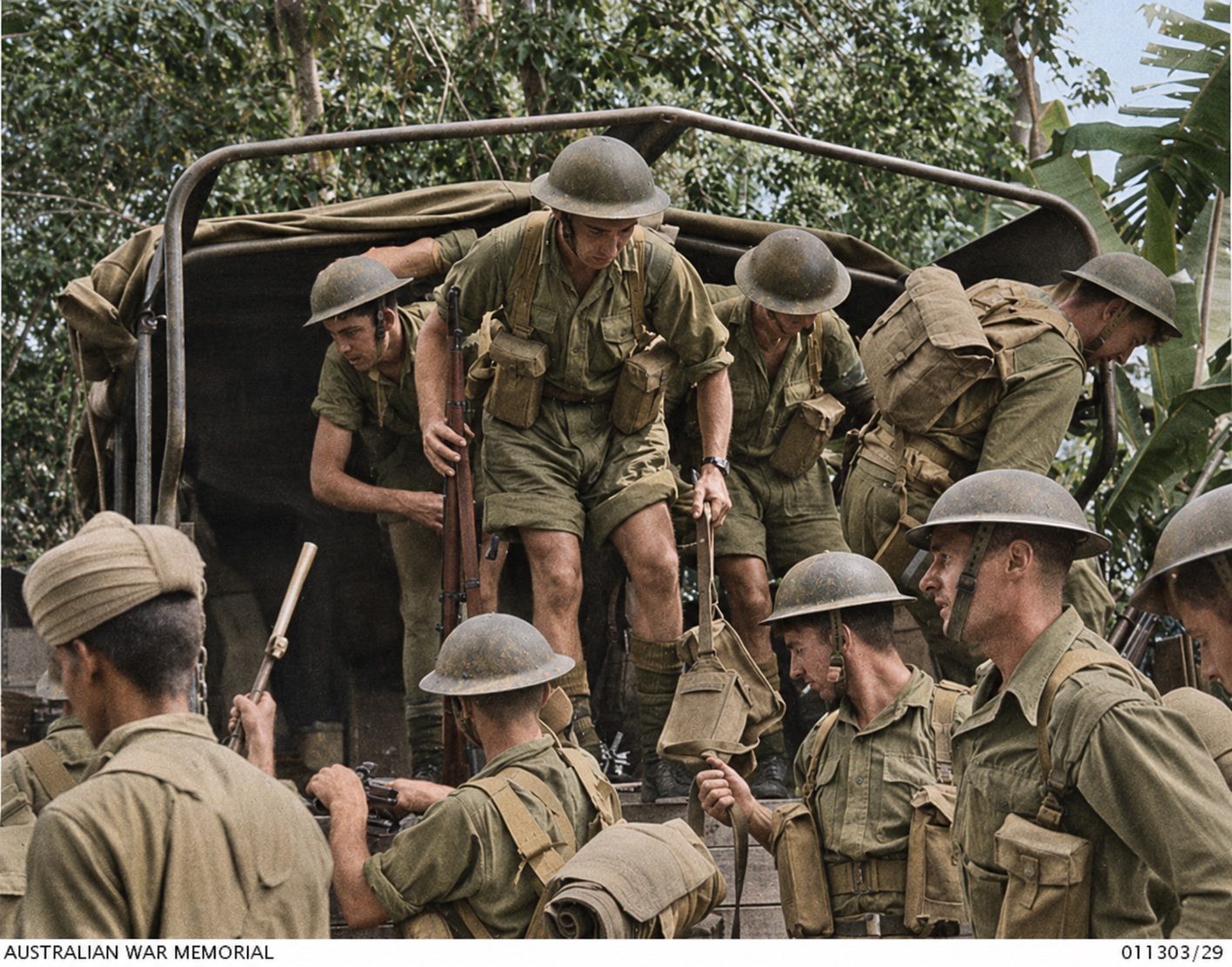
Force 136 was a British-led underground resistance group that operated in Malaya during World War II. There were about 50
members in the group which performed acts of sabotage and espionage against the Japanese.
The Oriental Mission of SOE attempted to set up “stay-behind” and resistance organisations from August 1941, but their plans
were opposed by the British colonial governor, Sir Shenton Thomas. They were able to begin serious efforts only in January 1942,
after the Japanese Invasion of Malaya had already begun.
An irregular warfare school, STS 101, was set up by the explorer and mountaineer Freddie Spencer Chapman. Chapman himself
led the first reconnaissances and attacks behind Japanese line. Although the school’s graduates mounted a few operations against
the Japanese lines of communication, they were cut off from the other Allied forces by the fall of Singapore. An attempt was made
by the Oriental Mission to set up an HQ in Sumatra but this island too was overrun by the Japanese.
Malayan Communist Party
Before the Japanese attacked Malaya, a potential resistance organisation already existed in the form of the Malayan Communist
Party. This party’s members were mainly from the Chinese community and implacably anti-Japanese. Just before the fall of
Singapore, the party’s Secretary General, Lai Teck, was told by the British authorities that his party should disperse into the
forests, a decision already made by the party’s members.
In isolation, the Communists formed the Malayan Peoples’ Anti-Japanese Army (MPAJA). Their first arms and equipment were
either donated by STS 101 before they were overrun, or recovered from abandoned depots. The MPAJA formed rigidly-disciplined
camps and units in the forest, supplied with food by networks of contacts among displaced Chinese labourers and “squatters” on
marginal land. Chapman had remained in Malaya after Singapore fell, but had no radio or means of contacting Allied forces
elsewhere. Nevertheless, the MPAJA still regarded Chapman as the official British authority, and Chin Peng was appointed liaison
with Chapman.
Singaporean World War II hero Lim Bo Seng had returned to Malaya from Calcutta in 1942, and recruited some agents who had
made their way to India by 1943. Force 136 attempted to regain contact with Chapman in Operation Gustavus, by infiltrating
parties which included Lim Bo Seng and former STS 101 members John Davis and Richard Broome by sea into the area near
Pangkor Island. Their radio was unable to contact Force 136 HQ and the MPAJA contacts on Pangkor Island were betrayed to the
Japanese.
The radio brought in by Gustavus was finally made to work in February 1945. Chapman was able to visit the Force HQ in Kandy
and report. By this time, Force 136 had substantial resources, and in the few months before the end of the war, they were able to
send 2,000 weapons to the MPAJA and no less than 300 liaison personnel. About half of these were British who had worked or
lived in Malaya before the war, the others were Chinese who had made their own way to India or who had been taken there by
Force 136 for training. With these resources, the MPAJA was built up to become a substantial guerilla army with about 7000
fighters. However, Japan surrendered before it had a chance to stage a major uprising.
In isolation in jungle camps for several years, the MCP and MPAJA had purged themselves of many members suspected of
treachery or espionage, which contributed to their post-war hard-line attitude leading in turn to the Malayan Emergency.
 Support this site with Buy Me Coffee